

Compare the theme Debutify with the theme FullStack to choose the solution that best fits your online store.
Looking to boost your conversion rates on Shopify? Are you wondering about the best theme choice for your store? Look no further, you are in the right place to clear up your doubts.
We've broken down Shopify themes for you Debutify et FullStack, in order to help you identify which one best fits your specific needs. Let's dive together into the characteristics and advantages of these two powerful tools to propel your e-commerce.
Are you in a hurry? Here is the conclusion of our detailed analysis below. The article below explains each point in detail.
Debutify is a Shopify theme designed first as a conversion tool before being a “design-first” showcase theme. Its promise is clear: to make you launch faster, sell faster, and replace part of the CRO app stack with native widgets, ready-to-use templates, and no-code customization.
FullStack is an all-in-one theme designed to sell more without piling up dozens of apps. Its philosophy is clear: combining premium rendering, speed and a real CRO/SEO arsenal in the same base. It is aimed as much at the store that is launching its first sales as at the brand that wants a solid architecture in order to grow properly. FullStack's ambition is to become the default choice for all brands.
Cart countdown, stock countdown, sales notifications, free shipping goal, volume discounts, volume discounts, product bundles, volume discounts, product bundles, back in stock, pre-order, pre-purchase offers, sticky add-to-cart, wishlist, smart search, mega menu, cart menu, cart upsell, cart reminder, recently viewed, cart reminder, cart reminder, recently viewed, recently viewed, recently viewed, variant swatches, volume discounts, volume discounts, volume discounts, volume discounts, volume discounts, volume discounts, volume discounts, volume discounts, product tabs, quantity breaks, product tabs, quantity breaks, delivery date, delivery date, delivery time, sticky add-to-cart, wishlist, smart search, mega menu, cart menu, cart upsell, cart reminder, reminder, recently viewed, recently viewed, variant swatches, volume discounts, volume discounts, volume discounts, volume discounts, volume discounts, volume discounts, volume, featured on, custom code, subscriptions.

The theme includes more than 100 distinct features: Stories, timer, mega menu, mega menu, wishlist, upsells, cross-sells, bundles, cart drawer, BOGO, promo code field, promo code field, comparisons, customer reviews, etc.
See The complete list of features of the theme.
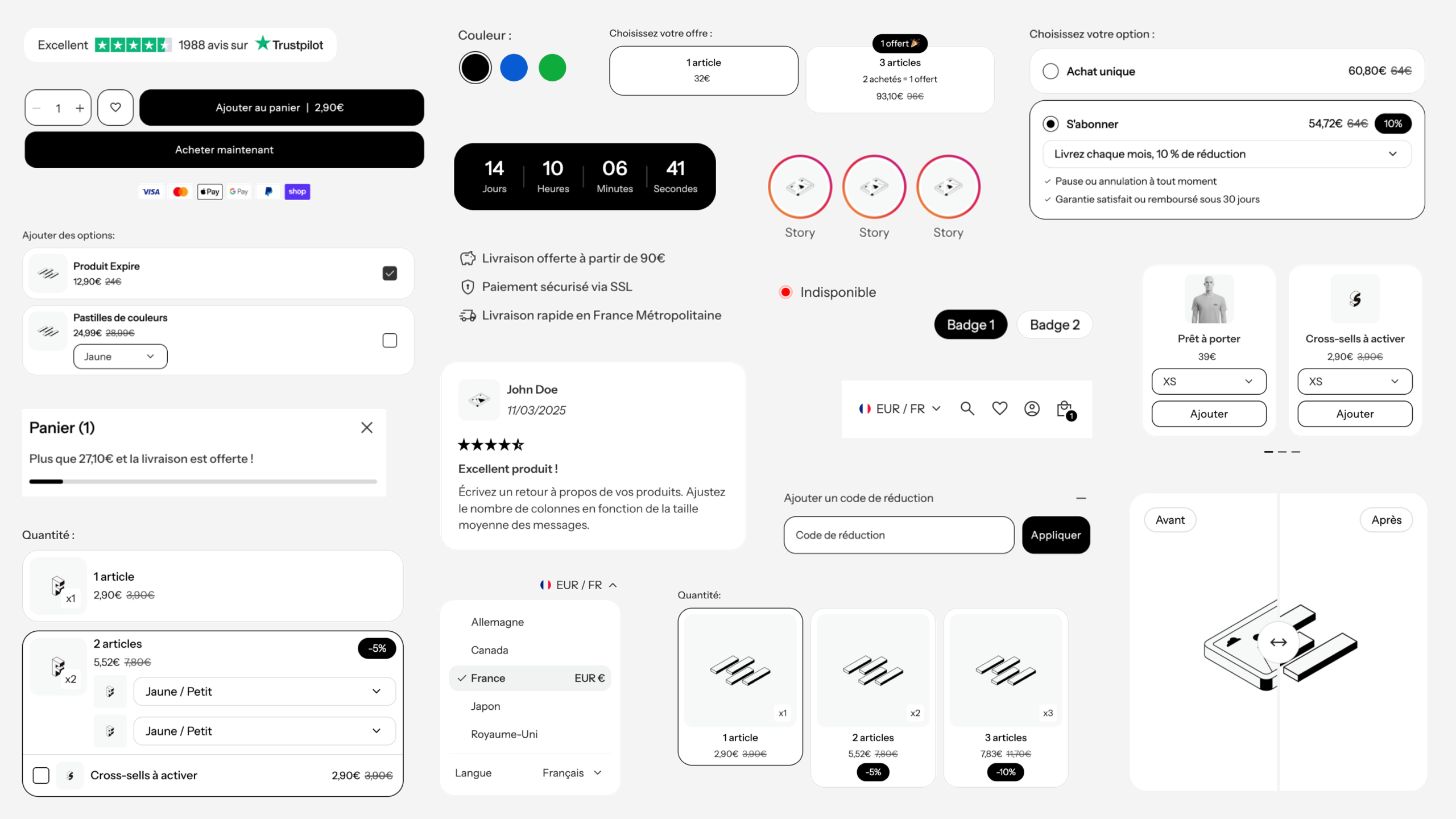
Debutify's design is relatively effective and designed to quickly guide the user to the purchase. The user experience focuses on calls to action, the readability of commercial sections and the promotion or proof of trust.
On the other hand, its rendering can seem quite generic (“Dropshipping” aesthetic) if you do not rework the branding in depth.
For a brand that wants to develop a strong and engaging brand image, Debutify is struggling to convince.

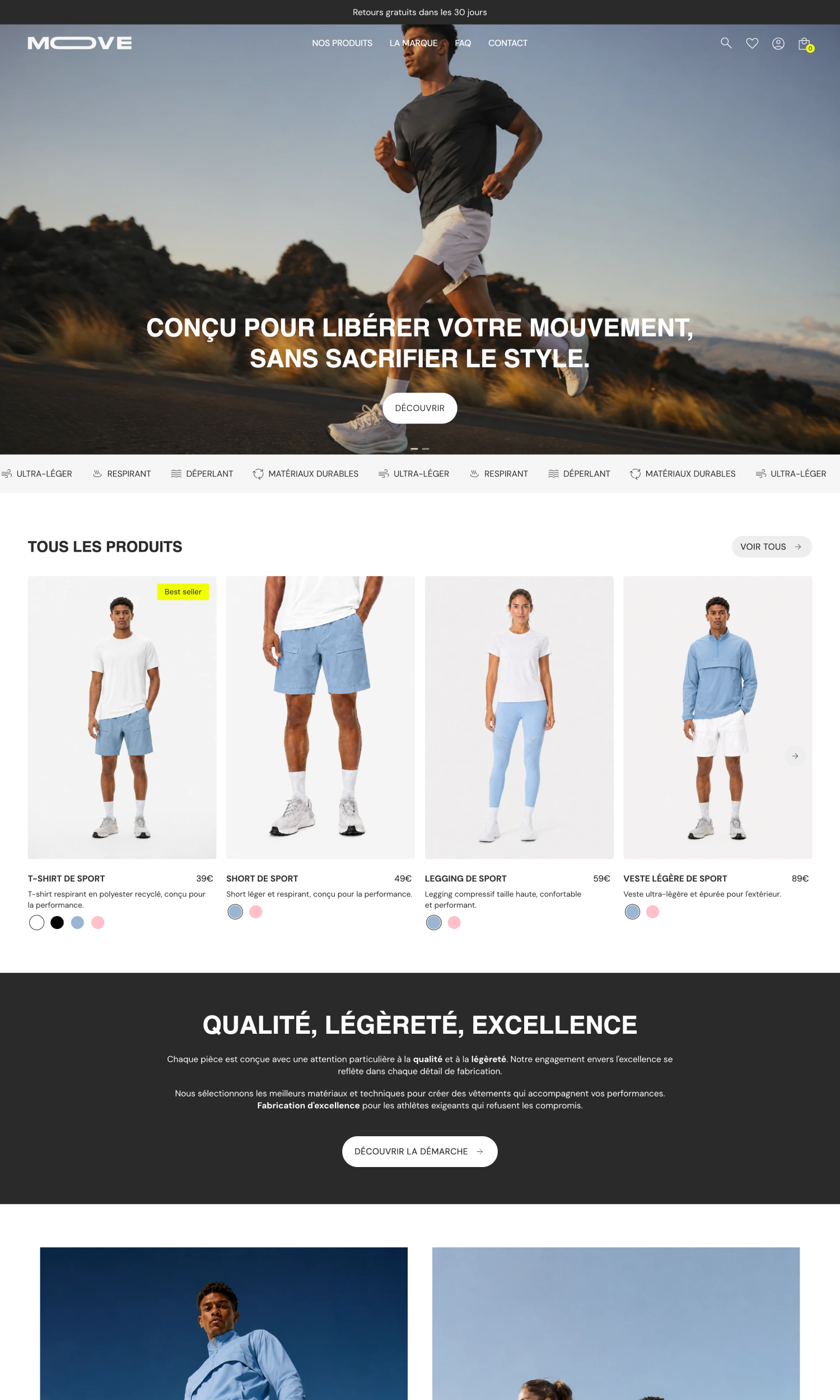
The design is not there to do a simple Dribbble demo, it is built to convert without being cheap. Customer feedback speaks of a modern, fluid, intuitive and professional rendering, with a quick handling. In short, it is a theme that is making a serious mark. The UX is clear and crystal clear, the UI is elegant and neat.
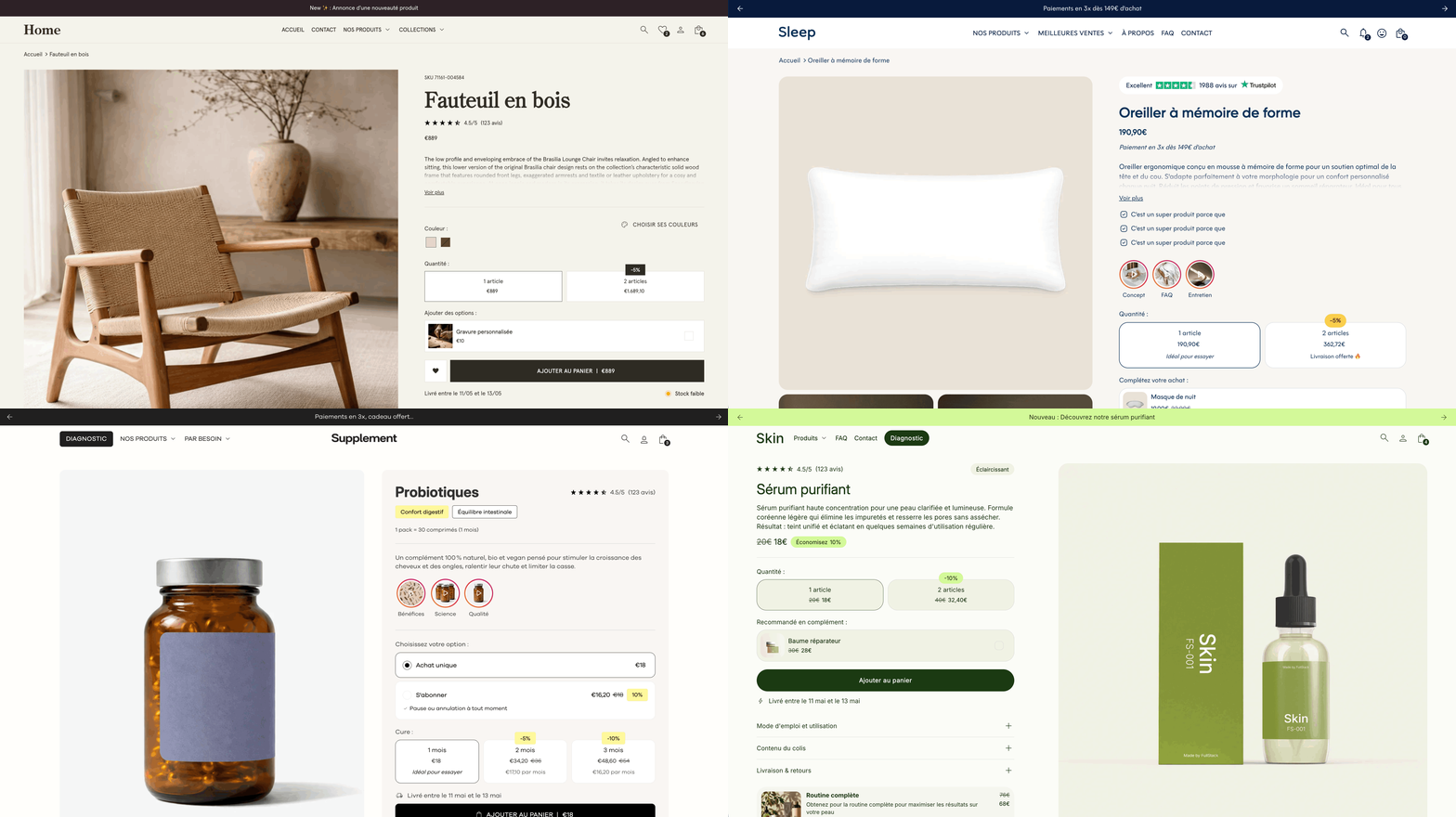
Lots of native CRO mechanics: upsells, countdowns, bundles, sticky add-to-cart, wishlist, smart search, etc.
Quick start thanks to demos, no-code, templates and free trial.
Can reduce the number of third-party apps if you really make use of built-in widgets.
The theme is relatively expensive if you want to have all the features (the unlimited package is $159 per month on its original price).
Design can quickly become a “generic theme conversion” if you don't seriously rework the branding.
Some advanced customizations still require CSS/code, and updates are manual.
User reviews are not uniformly excellent: price considered high, bugs or uneven performance, sometimes overly automated support, some criticisms about billing.
Its big strength is the density of functionalities: 100+ functionalities, 40+ sections, 60+ blocks, landing page templates, native SEO tools and very extensive support. All these basic tools are embedded in a Shopify 3.0 architecture that allows you to stack blocks and build any section like a page builder. You can do a lot without depending on Shopify applications that slow down the store.
The second strength of the theme is its “guaranteed rendering” approach: flexible enough to allow real customization, but framed enough so that the final result always remains clean, consistent and professional.
The first obstacle is the subscription model: if you want a one-shot expense or simply a free theme, this is not the right product.
The second is that the abundance of features can create a small overload effect that can make it less easy to understand, especially for those new to Shopify.
Yes, globally. Debutify checks a lot of the boxes of a CRO-first theme: upsells, bundles, countdowns, sticky add-to-cart, trust elements, search, wishlist and cart mechanics are natively integrated. On the other hand, a theme loaded with widgets alone does not guarantee a good conversion: you still need a clear offer, good branding and a clean setup.
Yes, very clearly. FullStack checks almost all the boxes you expect from a CRO-first theme: upsells, cross-sells, bundles, cart drawer, BOGO, promo code field, comparisons, social proof, social proof, landing pages, landing pages and test/optimization logic. Add to that a clean design and a claimed SEO/CRO approach, and you have a theme that is much more “ready to perform” than simply “pretty”.
The FullStack theme was co-created by the team of The Deployer agency, the number 1 CRO agency in France.
The theme incorporates the conclusions of more than 800 A/B tests carried out on more than 80 reference brands. It's the nectar of the best in CRO.
Debutify can become interesting in the long run when it really replaces several paid applications thanks to its integrated features.
For the most expensive plans, the theme is difficult to make money when compared to the costs of the applications it replaces.
Debutify's positioning is more oriented towards beginners who are launching their first e-commerce projects, yet their price seems to indicate a more upscale positioning.
The model is 100% subscription (annual or monthly), with cancellation possible at any time. On paper, this can be daunting; in practice, the calculation becomes much more favorable if you replace several paid apps and if you really make use of the sections, blocks, templates and SEO tools already included.

User reviews on Debutify are generally positive on the ease of use, the richness of functionalities and the responsiveness of the support in many cases. Many merchants appreciate the speed with which it is possible to put a functional store online. On the other hand, several negative feedback also mentions slowness problems, occasional bugs, billing considered unclear or support that is sometimes too automated.

The user signal is very strong: 4.8/5 out of more than 180 reviews, it's simply the top-rated Shopify theme. With recurring topics such as functional richness, speed, pedagogy and especially the responsiveness of the support. Many talk about saving time, reducing apps, and making things more professional. There are some very negative reviews, but they seem to be in the minority and often linked to licensing or support frictions, to which the brand responds publicly.
Debutify is especially suitable for beginner to intermediate merchants who want a Shopify store that is quickly up and running, with lots of features that are already ready to use. It may also be suitable for some more advanced brands that prioritize commercial efficiency and speed of deployment. On the other hand, for a very premium brand, very editorial or strongly supported by a tailor-made artistic direction, the theme may seem more limited in its native rendering.
FullStack is particularly relevant for DTC brands, shops oriented to paid acquisition, merchants who want to push CRO, and teams who want a “muscular” theme from the start. It's also a great fit if you hate multiplying apps and want to keep a consistent base. For a freelancer or an agency, the Business offer with GitHub fork makes it even more credible as a long-term basis.
Rated 4.9/5 out of 200+ reviews



.svg)
.svg)

.png)

.png)
.png)


