

Compare the theme Phantom Theme with the theme FullStack to choose the solution that best fits your online store.
Looking to boost your conversion rates on Shopify? Are you wondering about the best theme choice for your store? Look no further, you are in the right place to clear up your doubts.
We've broken down Shopify themes for you Phantom Theme et FullStack, in order to help you identify which one best fits your specific needs. Let's dive together into the characteristics and advantages of these two powerful tools to propel your e-commerce.
Are you in a hurry? Here is the conclusion of our detailed analysis below. The article below explains each point in detail.
Phantom is a premium French-speaking Shopify theme positioned as a complete solution for creating a “pro” store without starting from a custom build. His speech is based mainly on three promises: SEO, conversion and strong personalization. It is primarily aimed at e-retailers who want a theme rich in options and elements that are already ready to use and who are not picky about the final result.
FullStack is an all-in-one theme designed to sell more without piling up dozens of apps. Its philosophy is clear: combining premium rendering, speed and a real CRO/SEO arsenal in the same base. It is aimed as much at the store that is launching its first sales as at the brand that wants a solid architecture in order to grow properly. FullStack's ambition is to become the default choice for all brands.
Dynamic sections on product pages, page templates, FAQ, FAQ, FAQ, blog, newsletter, blog, newsletter, contact, reviews, reinsurance sections, cross-selling/recommended products, advanced customization, integrated applications, etc.

The theme includes more than 100 distinct features: Stories, timer, mega menu, mega menu, wishlist, upsells, cross-sells, bundles, cart drawer, BOGO, promo code field, promo code field, comparisons, customer reviews, etc.
See The complete list of features of the theme.
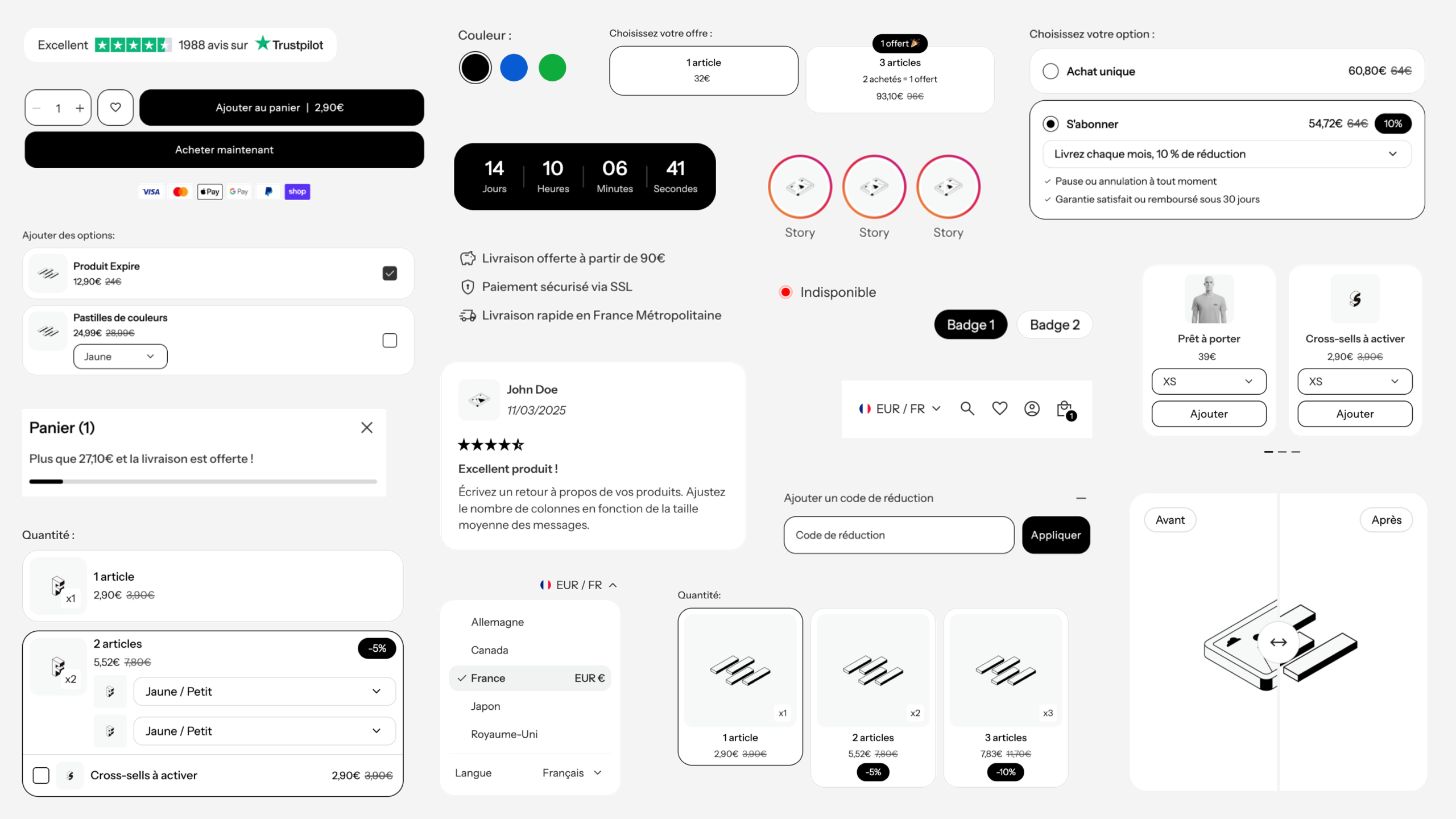
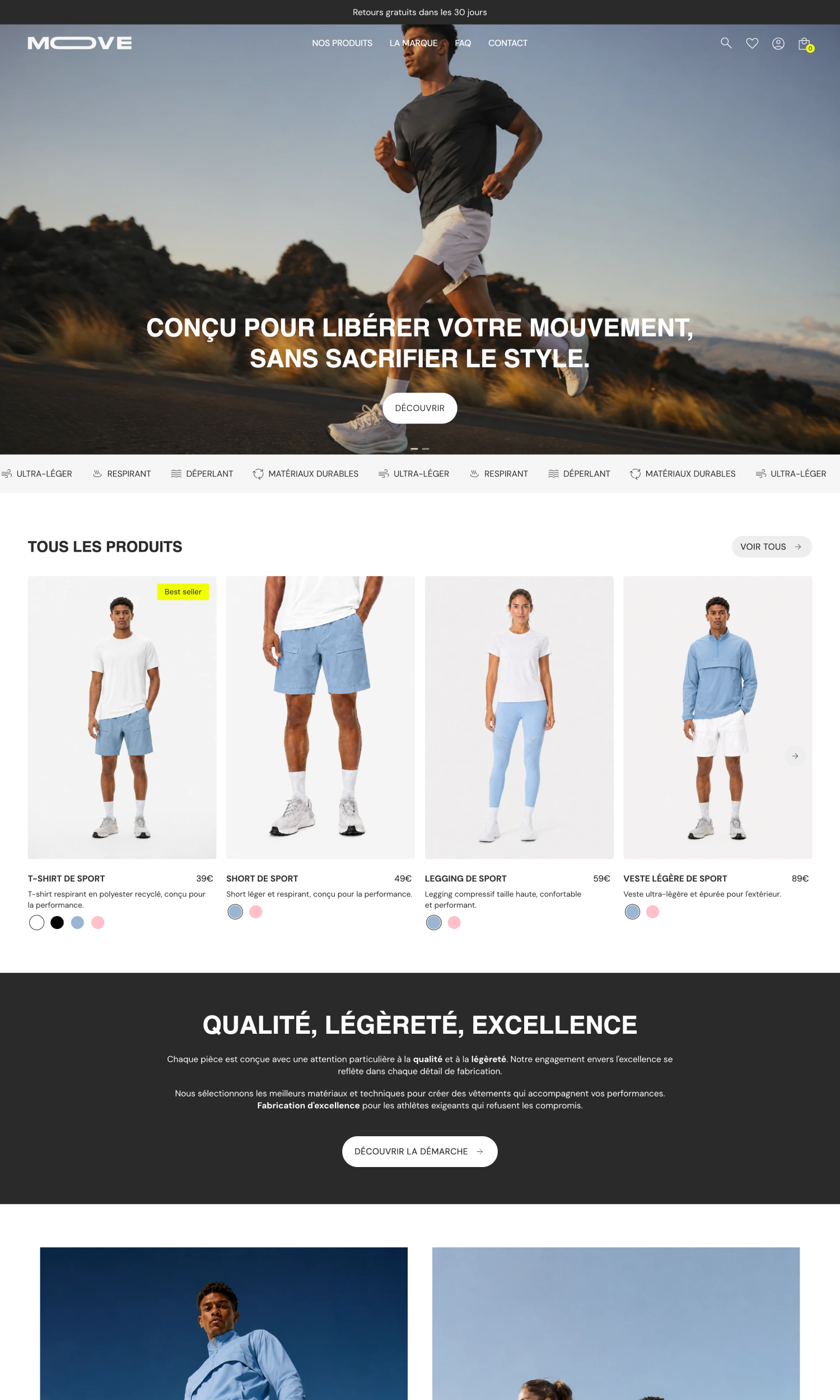
The result seems clean, modern and fairly marketable for classic DTC shops. User reviews regularly talk about a “beautiful”, “ergonomic” theme that is easy to handle. On the other hand, it is not one of the most advanced themes on the market in terms of UX sophistication or architectural flexibility.

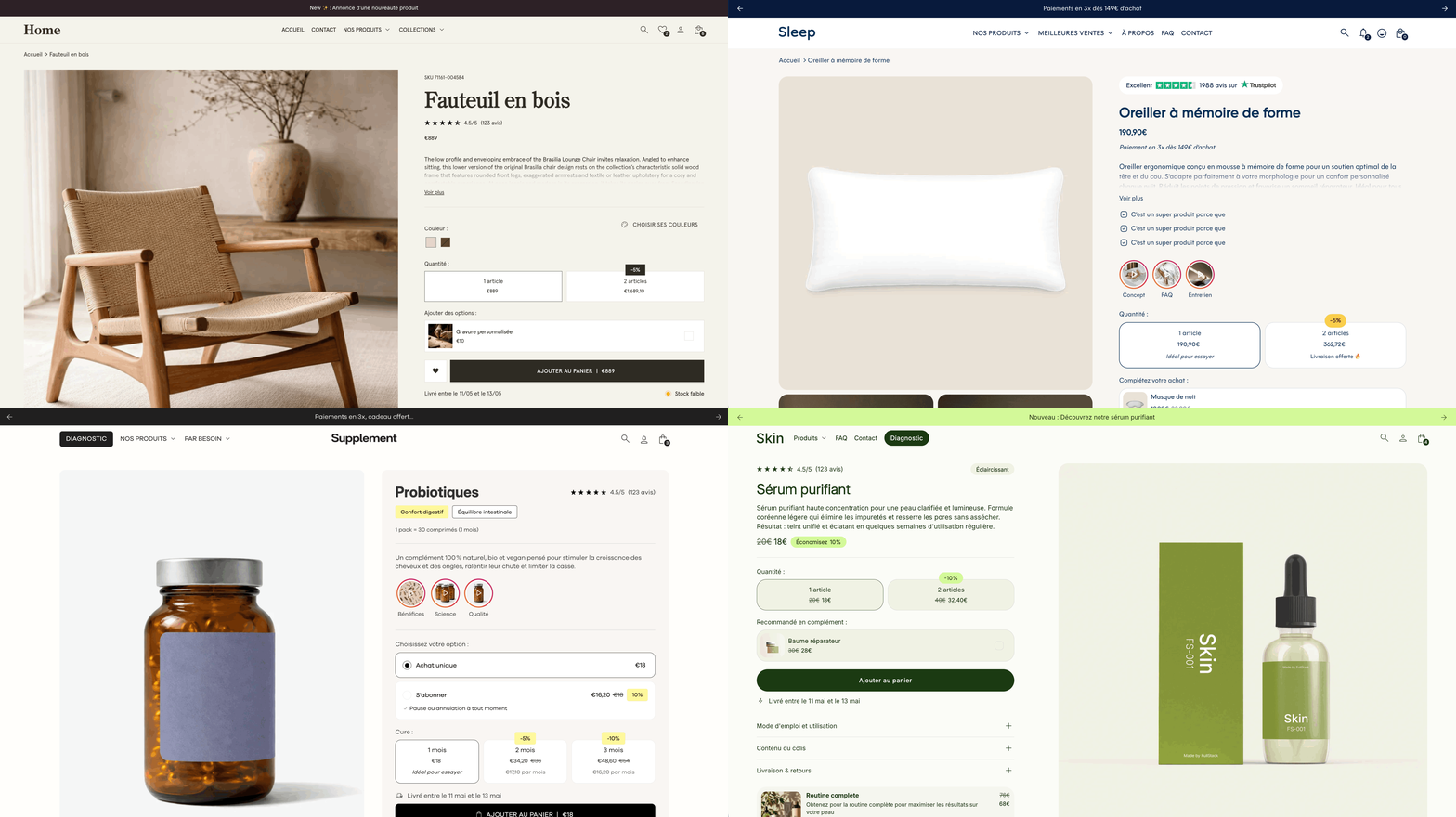
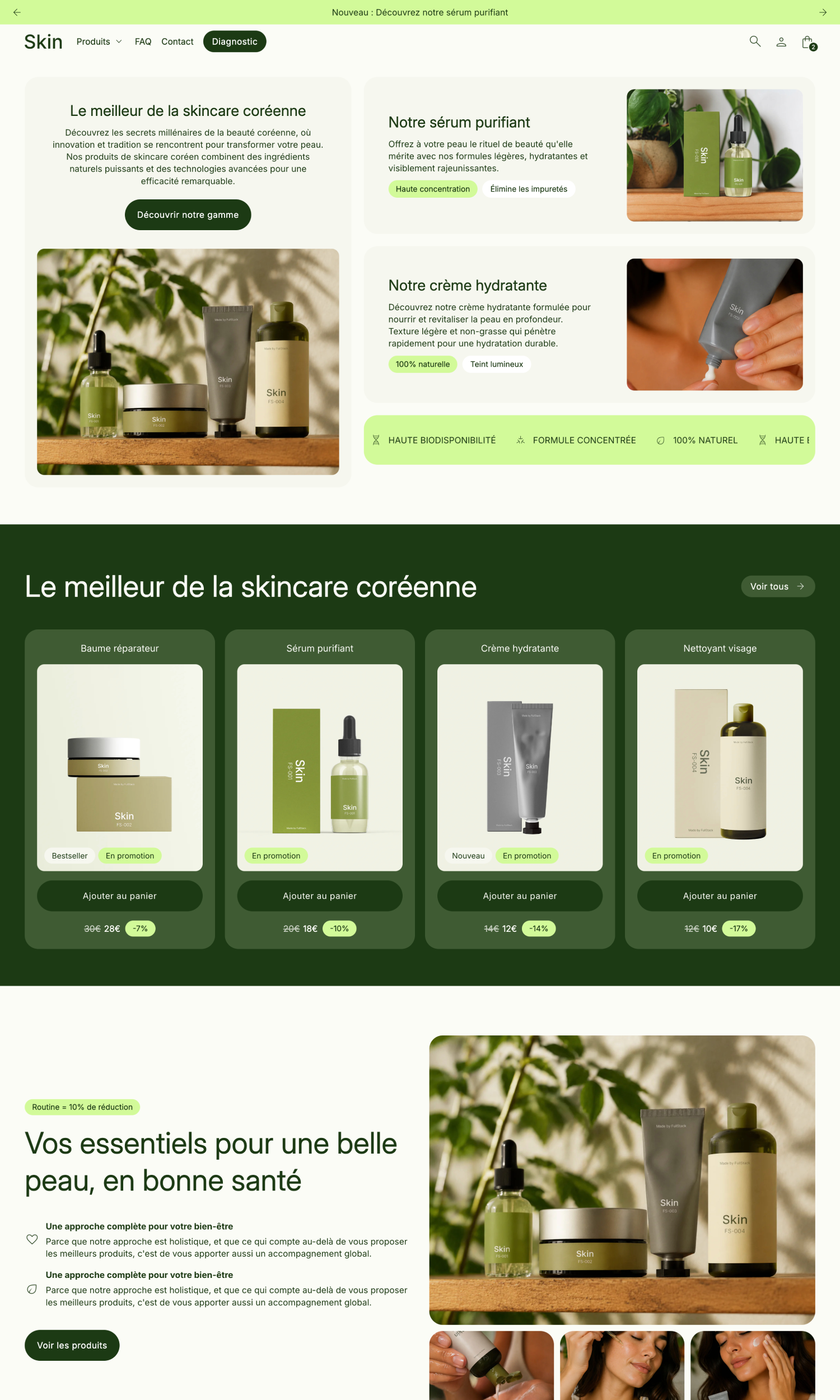
The design is not there to do a simple Dribbble demo, it is built to convert without being cheap. Customer feedback speaks of a modern, fluid, intuitive and professional rendering, with a quick handling. In short, it is a theme that is making a serious mark. The UX is clear and crystal clear, the UI is elegant and neat.
Lots of basic elements already integrated.
Good level of customization without code.
Customer support that is often considered responsive.
A fairly extensive ecosystem of tutorials
Not yet up to date on the Shopify “3.0” architecture.
No public changelog to track updates.
Some feedback indicates bugs or necessary adjustments.
Can become more opaque to maintain than a more standardized theme.
Relatively amateur rendering.
Its big strength is the density of functionalities: 100+ functionalities, 40+ sections, 60+ blocks, landing page templates, native SEO tools and very extensive support. All these basic tools are embedded in a Shopify 3.0 architecture that allows you to stack blocks and build any section like a page builder. You can do a lot without depending on Shopify applications that slow down the store.
The second strength of the theme is its “guaranteed rendering” approach: flexible enough to allow real customization, but framed enough so that the final result always remains clean, consistent and professional.
The first obstacle is the subscription model: if you want a one-shot expense or simply a free theme, this is not the right product.
The second is that the abundance of features can create a small overload effect that can make it less easy to understand, especially for those new to Shopify.
Rather yes, in the sense that Phantom combines a commercially correct design, lots of built-in features, and sections designed to enrich product pages.
Yes, very clearly. FullStack checks almost all the boxes you expect from a CRO-first theme: upsells, cross-sells, bundles, cart drawer, BOGO, promo code field, comparisons, social proof, social proof, landing pages, landing pages and test/optimization logic. Add to that a clean design and a claimed SEO/CRO approach, and you have a theme that is much more “ready to perform” than simply “pretty”.
The FullStack theme was co-created by the team of The Deployer agency, the number 1 CRO agency in France.
The theme incorporates the conclusions of more than 800 A/B tests carried out on more than 80 reference brands. It's the nectar of the best in CRO.
The model is 100% subscription-based with 3 different offers, each offering more or less functionalities. The entry cost is still reasonable if you want a lot of items included, but you have to integrate the subscription logic into your long-term calculation
The model is 100% subscription (annual or monthly), with cancellation possible at any time. On paper, this can be daunting; in practice, the calculation becomes much more favorable if you replace several paid apps and if you really make use of the sections, blocks, templates and SEO tools already included.

The reviews are generally very positive, with a 4.8/5 out of 76 reviews on Trustpilot at the time of writing. The points that come up most often are the responsiveness of the support, the functional richness, the ease of customization and the tutorials. The visible criticisms focus mainly on a few bugs and on the need for certain updates or corrections on the support side.

The user signal is very strong: 4.8/5 out of more than 180 reviews, it's simply the top-rated Shopify theme. With recurring topics such as functional richness, speed, pedagogy and especially the responsiveness of the support. Many talk about saving time, reducing apps, and making things more professional. There are some very negative reviews, but they seem to be in the minority and often linked to licensing or support frictions, to which the brand responds publicly.
Phantom is well suited to French-speaking Shopify merchants who want a turnkey theme, rich in options, with support and educational resources. It is relevant for emerging or growing brands that want to avoid piling too many apps or starting on custom development too early. It seems less obvious to me for a very advanced brand that is looking for an ultra-modern architecture, very clean on the dev side, or a level of modularity comparable to the most recent themes.
FullStack is particularly relevant for DTC brands, shops oriented to paid acquisition, merchants who want to push CRO, and teams who want a “muscular” theme from the start. It's also a great fit if you hate multiplying apps and want to keep a consistent base. For a freelancer or an agency, the Business offer with GitHub fork makes it even more credible as a long-term basis.
Rated 4.9/5 out of 200+ reviews



.svg)
.svg)

.png)
.png)
.png)


